HSA Adoption Has Steadily Grown Over the Past 15 Years
By Mark Howell of Paragon Health Institute | Originally posted here
Despite ongoing concerns about rising health insurance premiums, hospital price growth, and limited consumer control over their health care decisions, one notable success is the continued expansion of Health Savings Accounts (HSAs).
An HSA is a tax-advantaged account that allows individuals enrolled in a high-deductible health plan (HDHP) — now including bronze and catastrophic plans available in the individual market — to set aside funds for qualified medical expenses. Contributions are made with tax-free dollars, balances grow tax-free, and withdrawals remain tax-free when used for eligible medical costs. Unlike flexible spending accounts and health reimbursement arrangements, HSA funds roll over indefinitely and are fully owned by the individual.
HSAs are paired with HDHPs, including bronze and catastrophic plans, which typically carry lower monthly premiums but higher upfront deductibles. This structure gives individuals greater control over how their health care dollars are spent and encourages shopping for lower cost items and services.
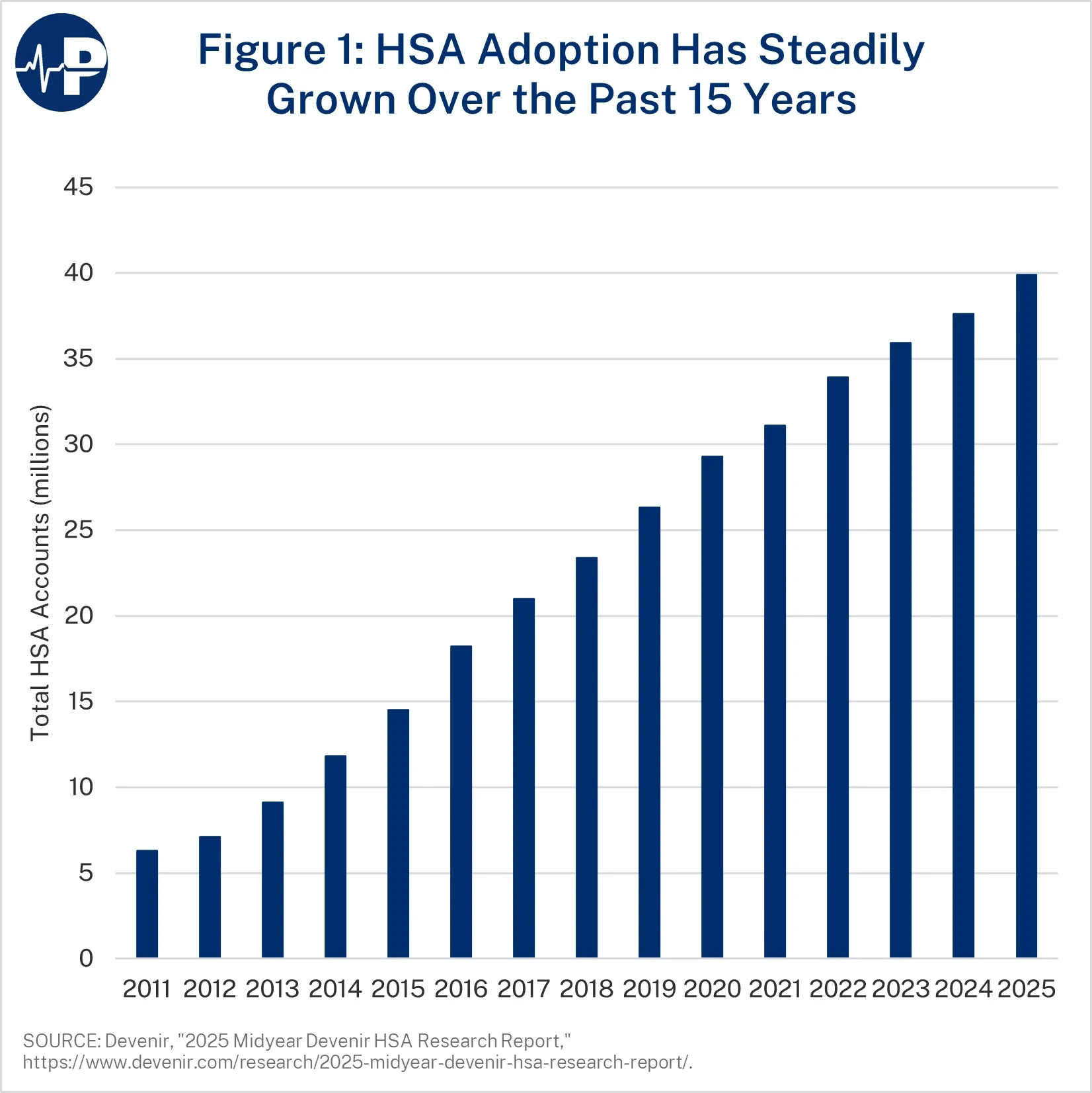
Figure 1 shows the growth in total HSA accounts. Accounts increased from just 6.3 million in 2011 to nearly 40 million by 2025. The number of Americans covered by an HSA account as of 2024 was almost 60 million, roughly 33 percent of privately insured individuals.